

Hair Transplant Recovery Timeline: Week by Week
Deciding to have a hair transplant is a huge decision. If looking for Hair Transplant Treatment in Ahmedabad, Dr Rafaliya’s Skincare Clinic is the best choice for you. And once the surgery has been carried out, you will likely ask yourself, What next? Knowing what comes next in the hair transplant recovery timeline also makes you feel more confident at each step. Of course, every person will heal at their own pace, but here’s a basic week-by-week breakdown of what you can expect after surgery.
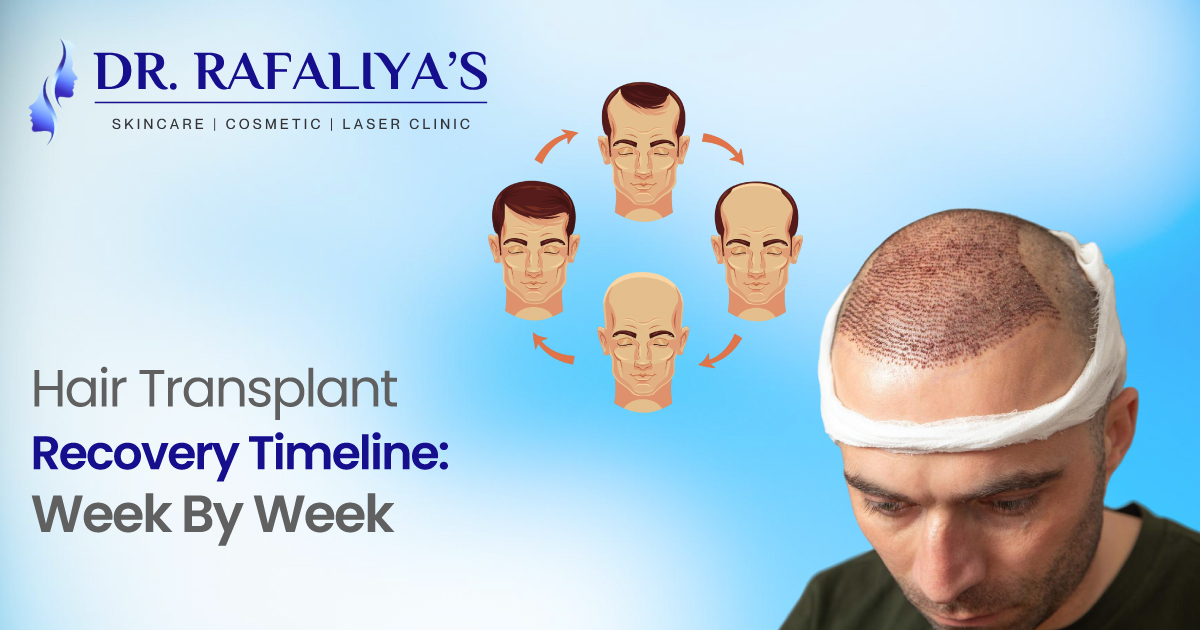
Week 1: Healing Begins
Let’s start by gently caring for your bearded new friend. You might also notice your scalp feels tight, swollen to the touch or tender, both normal side effects post-treatment. Tiny scabs start to develop around the grafts once they are implanted, although redness can remain for several days. Most surgeons recommend sleeping with the head elevated and not rubbing or scratching the area.
You may wash your hair gently as directed, preferably with a mild shampoo. Most people go back to work in an office setting within 3–4 days, but it’s best to avoid vigorous exercise or anything that increases blood flow to the scalp. This week is just about letting the grafts set.
Week 2: Scabs Fall, Shedding Starts
By the second week, most scabs begin to shed naturally. The donor area on the back of your head also looks much better, with any tightness or soreness gradually fading.
Something that often surprises people happens around this time—shedding of the transplanted hair. It is normal. The roots stay intact beneath the skin, while the hair shaft falls out due to the hair cycle. Don’t panic; the new hair will regrow from these roots in the coming months.
Week 3–4: Back to Normal
The scalp is nearly normalised by week three, and most people feel fine going out without a cap. The redness diminishes, and the transplanted area seems like the surrounding hair. It may still chart a little bit longer, but it’s nothing to worry about.
At that time, the transplanted follicles go into the menacing phase. It seems like nothing is happening, but healing is occurring beneath the skin. You can return to work and outdoor activities.
Month 2–3: New Hair Sprouts
These are interesting months because early in this time period, you begin to see the first signs of regrowth. The hair that grows back initially may appear thinner, softer or lighter in colour. It's known as the baby hair stage, and it’s totally normal.
Then, the mental strain eases because you have finally seen progress after waiting weeks. Remember that growth takes time, so be patient.
Month 4–6: Noticeable Growth Phase
It is the moment you actually experience the transformation happening. The patchiness does start to fill in little by little. The hair gets thicker, and styling is made simpler.
Around this point, most start to receive compliments, as the transformation is visible.
Months 6–9: Major Improvement
At this point, about 60–70% of the final result has usually developed. It blends really well with the rest of your hair, so it looks better overall. The volume and the texture appear even more organic.
If your surgeon employs these modern techniques, such as FUE or FUT, you may achieve faster growth than with the conventional methods.
Month 9–12: Final Results Take Shape
This is the step, the hair is thicker, stronger and completely formed. Any tiny gaps get taken care of on their own. You can dye or straighten your hair like before.
The outcome is a long-lasting, beautiful, and permanent result (as long as you also follow proper aftercare), so as you take care of your scalp, it will last.
Final Thoughts
The hair transplant healing process timeline may seem slow to start, but the body will flourish over time with consistent progress toward the natural hair you have been waiting for. With the expert surgeon at Dr Rafaliya’s Skincare Clinic, the proper aftercare and a healthy dose of reality, it’s all so much easier. Just keep in mind—hair growth is a waiting game, but trust me, the results are so worth it.
